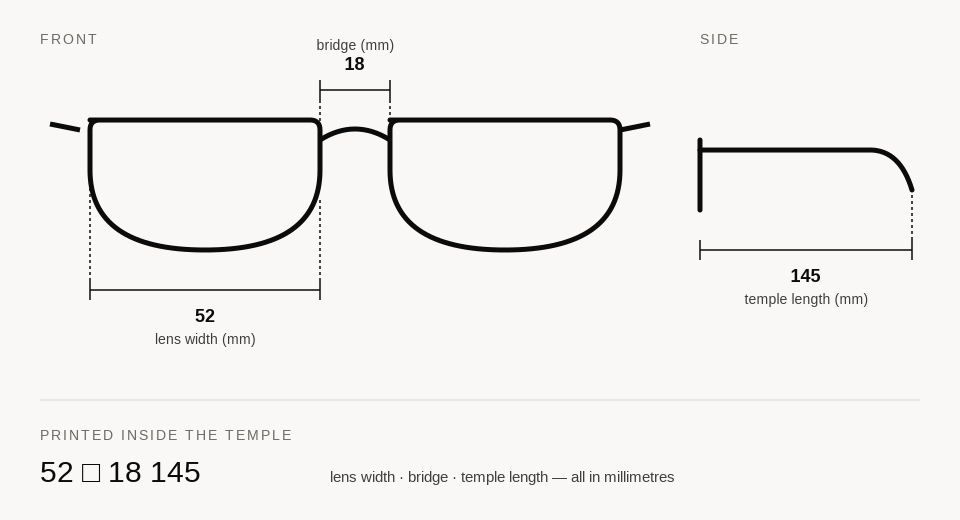
Every pair of sunglasses carries its measurements inside one of the temples: three numbers such as 56□16 145. They are the fastest way to judge how an unfamiliar frame will sit on your face without trying it on, provided you know when two numbers can be compared directly — and when a wrap curve changes the rules.
The three numbers
| Number | Example | What it measures | What it changes on your face |
|---|---|---|---|
| Lens width | 56 | Widest horizontal span of one lens | How wide the front looks and how far it covers toward the temples |
| Bridge | 16 | Gap between the two lenses across the nose | How high or low the frame rests, and whether it pinches or slides |
| Temple length | 145 | Arm length from the hinge pivot to the tip | Whether the arm reaches comfortably behind the ear |
The small square (□) between the first two numbers marks the optical boxing system: each lens is measured as if enclosed in a tight rectangle. That keeps widths comparable across oval, cat-eye, rectangular and navigator fronts.
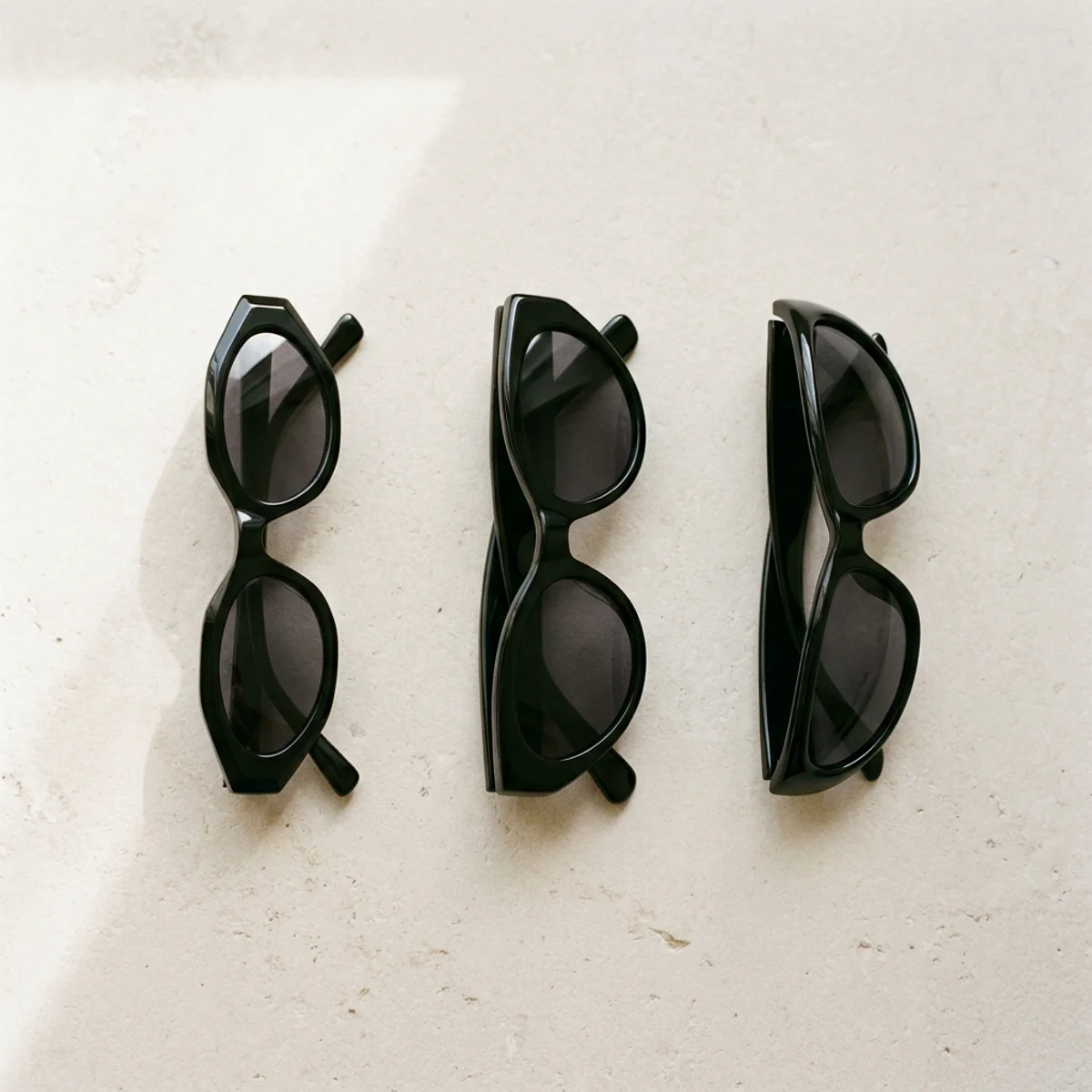
Why wrap and thick-lug frames show 110–125mm temples
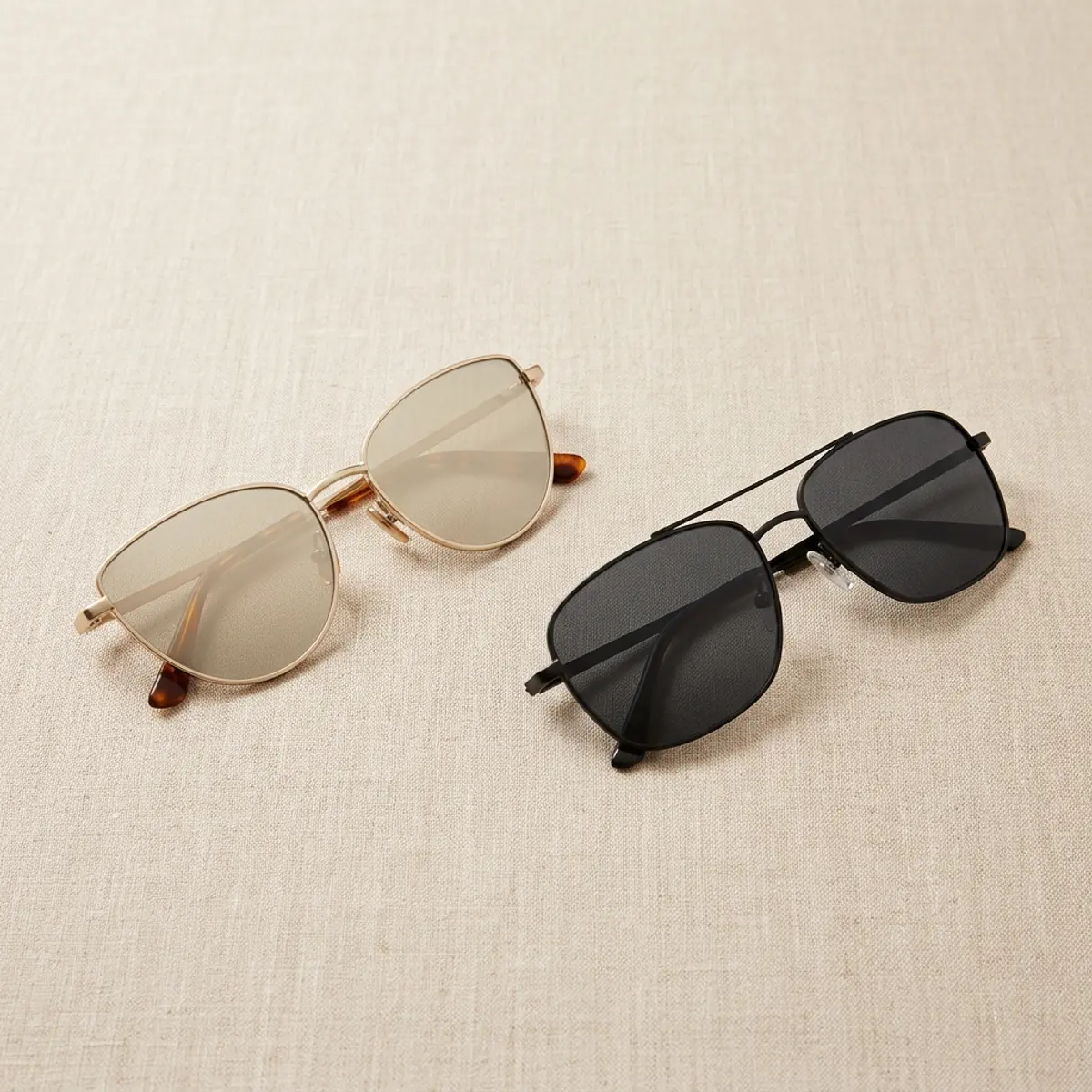
One of the most common mistakes buyers make when reading luxury or sport sizing is rejecting a frame because the third number looks short. On flat metal frames such as the Prada PR A57S (61□15-145) or Chanel 9587 (56□16-145), the hinge sits right behind the lens rim, so the arm needs 140–145mm to reach behind the ear.
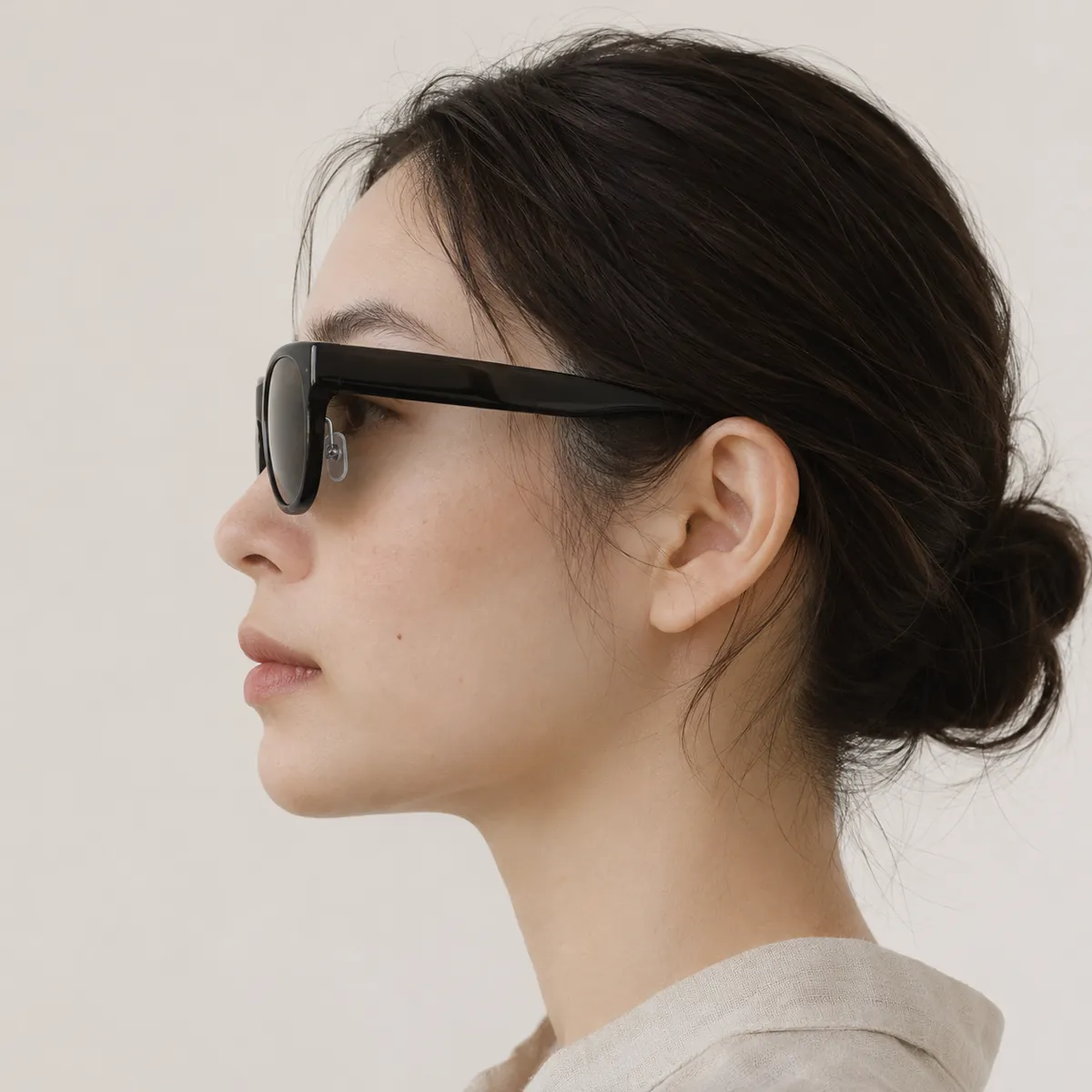
On curved wraps and deep-hinge acetate frames, the front curves or steps back 20–35mm before the hinge even starts. Because manufacturers measure temple length strictly from the hinge pivot, the printed number drops to 110–125mm even though the total reach to the ear stays the same.
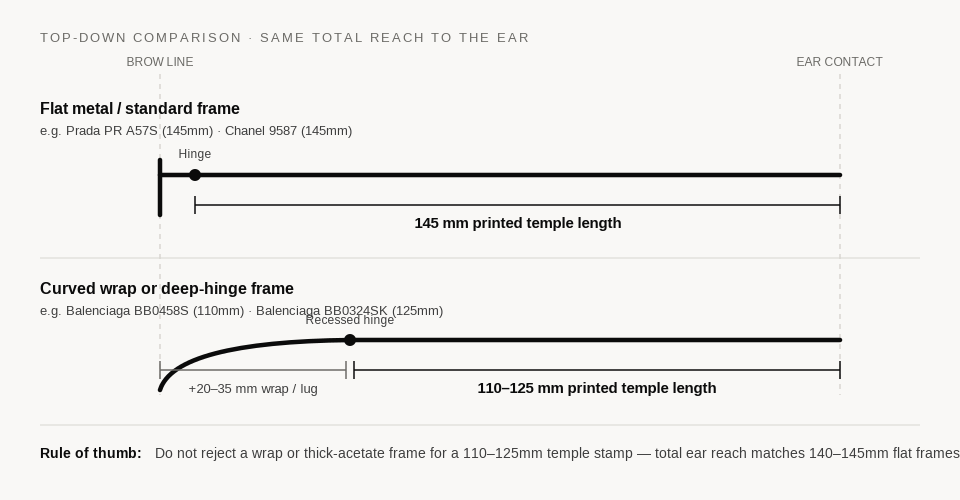
Real size brackets across our curated picks
Instead of guessing from generic “S / M / L” labels, compare your current pair directly against these real temple stamps:
| Model | Stamped size | Construction | Typical face fit |
|---|---|---|---|
| Prada x Gentle Monster PR D25S | 54□17 135 | Flat narrow acetate front, slim titanium arms | Narrow to medium |
| Balenciaga Nano Round BB0455S | 55□16 140 | Bevelled narrow oval acetate | Small to medium |
| Balenciaga BB0324SK | 55□19 125 | Thick Low Bridge Fit acetate, deep split-B hinge | Medium (low bridge / high cheekbones) |
| Chanel 9587 | 56□16 145 | Flat metal cat-eye with adjustable nose pads | Narrow to medium |
| Prada PR A57S | 61□15 145 | Lightweight steel double-bridge navigator | Medium to wide |
| Balenciaga Linea Extreme BB0458S | 73□21 110 XL | High-curve bio-nylon wraparound | Medium to wide (close wrap) |
| Oakley Stunt Devil OO9525 | 137 (Size L) | Rimless sport mono-shield, Low Bridge Fit | Medium to wide sport fit |
Four steps to check fit before ordering
- Copy the stamp from a pair that already fits you well. Look inside the left temple arm.
- Match flat-frame lens width within ±2mm. Every extra 1mm per lens adds 2mm across the face.
- Check bridge type, not just bridge millimetres. A
15mmmetal bridge with adjustable silicone pads (Prada PR A57S) opens wider and sits higher than a fixed16mmacetate bridge. - Ignore short temple numbers on wraps and thick hinges. Judge Balenciaga BB0324SK and BB0458S by front shape and wrap curve rather than expecting a
145stamp.
If standard acetate frames slide down your nose or rest on your cheeks when you smile, read our low bridge fit guide next.